
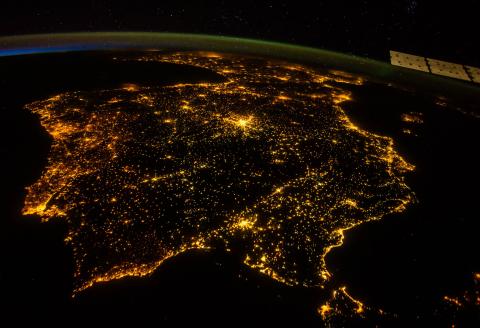
Spain is set to be the leading destination for international astronomical observation during the period 2026–2028. The convergence of three consecutive astronomical events offers visitors a unique opportunity to discover the diversity of Spain under conditions of visibility that are unrivalled in Europe.
On this map you can see the preferred vantage points. We’ve also put together some tips to help you organise your visit efficiently and safely:
The events calendar
When planning your viewing, you should take into account the characteristics and visibility zones of each of the three eclipses:
- 12 August 2026 (total eclipse). The shadow will pass over the northern and central third of the peninsula, the eastern region and the Balearic Islands. It is an event that will take place at dusk, offering a unique view of the horizon.
- 2 August 2027 (total eclipse). The path of totality will pass over the southern part of the peninsula, Ceuta and Melilla. As it will take place mid-morning in areas with a very high probability of clear skies, and as it is the longest eclipse, large crowds are expected.
- 26 January 2028 (annular eclipse). The ‘Ring of Fire’ phenomenon will stretch from the south-west to the Mediterranean. It’s the perfect opportunity to enjoy this kind of eclipse from inland Spain and the east coast, bathed in the soft winter light.
Arrival of visitors
- Many people will be travelling to Spain or around the country to experience this event, which will pose a challenge in terms of management and organisation, particularly in rural areas or those with lower population densities.
- Much of the country will see its usual tourist occupancy rates rise as a result of these eclipses, posing an additional challenge in managing these visitors.
- If you are planning to attend an eclipse viewing, please bear in mind certain practical considerations regarding your journey and your stay in the area.
- Many of the areas through which the path of totality will pass are tourist destinations and inland locations with rural accommodation close to the viewing spots. What’s more, many of them are located in areas and towns that have Starlight certification so you’ll be able to enjoy skies that are ideal for stargazing.
- Make the most of this opportunity to enjoy stargazing and astrophotography. The days leading up to or following the eclipse are also an excellent opportunity to discover parts of Spain where you can really switch off.
- Turespaña, via its website Spain.info provides information on all destinations in Spain, as well as its cultural, culinary, artistic and natural heritage. Take this opportunity to discover that place you’ve never been to before or don’t know well enough. You’ll be surprised to discover just how much Spain still has to offer.
A variety of destinations and geographies
Each of the events will focus on different geographical regions of Spain:
- Natural environments and Starlight certifications. Spain is a pioneer in the protection of the dark sky. It offers numerous certified sites that are ideal for quiet, respectful stargazing.
- Heritage and urban environments. The shaded areas pass through World Heritage cities and towns with a wealth of cultural attractions. You can combine stargazing and exploring the rich heritage of each region.
- Rural and inland areas. Many of the best vantage points are found in rural Spain. The Trio of Eclipses presents an opportunity to boost the local economies of these areas, which are making specific preparations to offer the best possible services.
Planning recommendations
To ensure you have a positive experience in any of the three years, we recommend you follow these guidelines:
- Plan ahead of time. Due to global interest, accommodation and transport in the most popular areas tends to sell out months in advance. We recommend that you assess your travel needs and, if necessary, make your bookings well in advance.
- Responsible mobility. Please use public transport where possible and follow the traffic guidance issued by the DGT and local authorities. On the day of the event, avoid last-minute journeys to prevent traffic congestion.
- Respect for the environment. Always follow the clean-up guidelines, look after the environment, and only use areas designated for public use, especially if you are visiting a natural setting.
- Risk of fire. The eclipses in August (2026 and 2027) coincide with the period of highest fire risk in Spain. If you are going to be in high-risk areas or travelling to rural or mountainous areas for viewing, take every possible precaution.
- Download our guide to responsible tourism during the eclipse.
Official tools and links
On this website, you have permanent access to up-to-date resources for the three events:
- Path Centre. Check timetables, journey times and visibility levels based on your location.
- Official guides on health and safety and civil protection
- Mobility recommendations. To ensure safe travel and minimise congestion, government agencies have developed a number of coordinated lines of action.
- Eclipse viewing points. To ensure you have the best possible experience, the various autonomous communities have identified a number of preferred observation points. These are venues that offer ideal conditions in terms of visibility, accessibility and the capacity to accommodate people safely.
- Spain.info promotes destinations beyond the specific events of eclipses, showcasing Spain as a destination for stargazing.